
A Mirror & The Window reflection on Once Upon a Time in Harlem
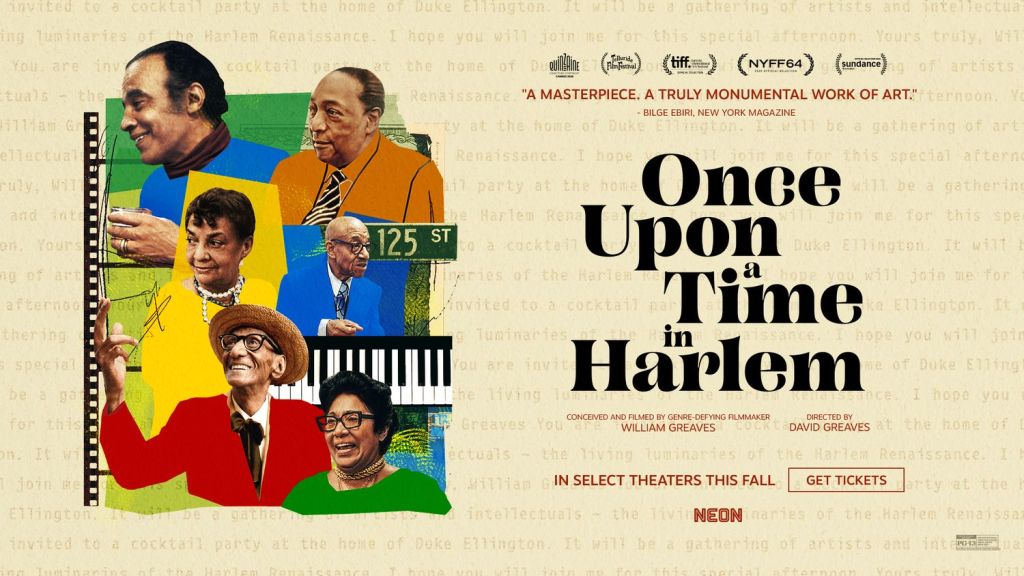
In 1972, filmmaker William Greaves brought artists, writers, musicians, and thinkers of the Harlem Renaissance together at Duke Ellington’s townhouse. Many had not seen one another in decades. They reminisced, argued, laughed, and reflected on the movement they had helped shape. The gathering was filmed, and decades later Greaves’ son, David, completed the documentary Once Upon a Time in Harlem.
This was no ordinary dinner party, and in some ways it was. The film draws us into the conversations, movement, and competing memories. These people are not fixed in the decade when they became known. They are alive in the room: speaking, listening, laughing, disagreeing. I felt as though I had entered a gathering already in progress.
The line that stopped me
Then I heard the line:
“My parents were enslaved.”
He said it matter-of-factly. I did not hear remorse, pain, or sorrow in his delivery. He stated it as a fact of his life, then moved on. It was not the point of the story he was telling.
But I stopped there.
I knew slavery was part of my own family history. My great-grandfather’s parents had been enslaved. I knew that as a fact—something I could place in a family tree, alongside names, dates, and records. And still, sometimes, that knowledge could feel distant. Almost academic.
His words were not offered to create a moment of sorrow for me. They belonged to the story as he was telling it. That plainness was part of what shook me. The fact did not need to be announced or explained. It was simply there, in the life he was describing.
I felt the force of it all at once: shock, grief, anger, tenderness, and a closeness I cannot easily separate into one feeling. The line stung. He moved on; I was left feeling how alive that history was—and how much it connected the people in that room to the history I carry.
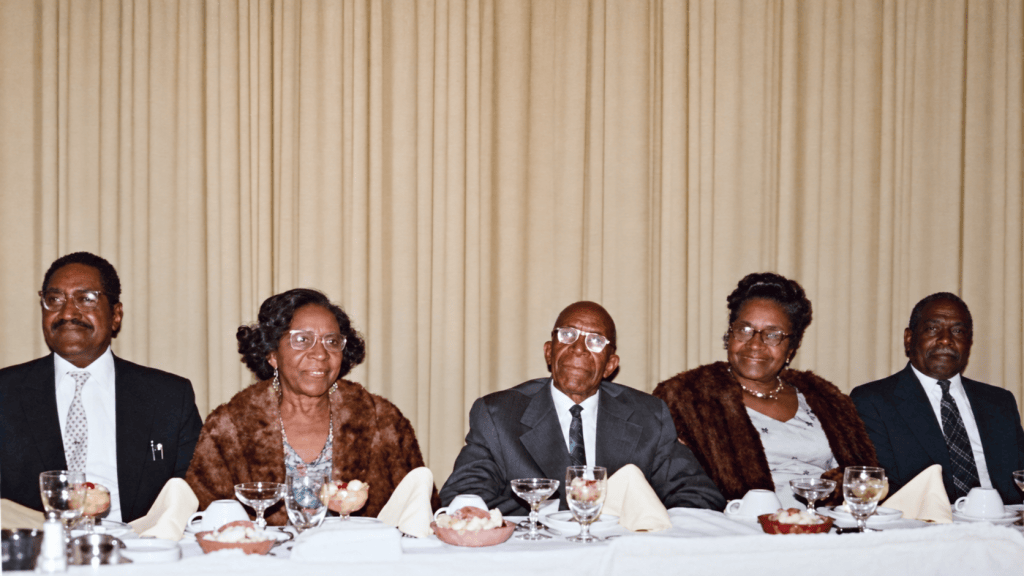
The gathering recalled the parties I walked into as a child, surrounded by elders and elder elders, and visits from my great-aunts and great-uncles back home. I remember the familiarity, tenacity, and connection of those gatherings. The film brought back the feeling of being among people whose stories and knowledge I was only beginning to understand.
The lives beyond the chapter
I had thought about the Harlem Renaissance as a remarkable peak in the 1920s. The film changed the scale of that story. These figures were not only significant in the decade when their work flourished. Their lives continued. Their presence and tenacity reached into my lifetime. I saw more of the life beyond the familiar historical frame: the years, the changes, the learnings, the continued contributions.
After the film, I wanted to know more about everyone in the room. I started looking up who was there, what each person had done, and what their lives were like in 1972. Some names were familiar. Others were new to me. It struck me that some people I was only now discovering were already elders then. They had lived through decades of change and brought that experience into the room.
I’m still following those threads. One name leads to another life, another collaboration, another piece of history I had not encountered. We live in a time when much more of that history is within reach through archives, interviews, digitized books, and the work of people recovering overlooked stories. Access does not make the record complete. It gives me more ways to keep asking questions.
What the film leaves unsaid
That search is also making me think about what the film says and what it leaves unspoken. Queer Black artists and thinkers helped shape the Harlem Renaissance. Richard Bruce Nugent, a writer and artist whose work expressed same-sex desire, was among the people gathered in the film. His presence matters. At the same time, a person’s presence in the room does not tell us how fully queer lives, relationships, and forms of kinship enter the conversation. You can read more about Nugent’s life and work in Gay Rebel of the Harlem Renaissance.
I found myself listening for what was named and what remained coded. I heard shade and tension that felt familiar to me, even when I did not have the full historical context. What was I recognizing? What did the people in the room understand about one another that the film did not explain? What was I bringing to the scene from my own experience?
I want to read between the lines, and I want to be careful about what I claim to find there. Resonance is not proof of what someone intended. It can be a signal that there is more to investigate. Research may confirm an instinct, complicate it, or show me where I have been filling in context the film does not provide. The language and categories used to describe LGBTQ people have also changed over time, so the past does not always map neatly onto the words we use today.
When I wonder whether these coded conversations and forms of kinship belong only to the past, I am also asking what continues in the families and communities around us now. What histories have been carried forward in ways that are difficult to name? What has been made visible, and what has remained understood only by some of the people in the room?
What we recognize before we can name it
Maybe culture is that strong. A way of speaking, teasing, disagreeing, or circling around a subject can feel familiar before we know its history. Culture travels through art, family, community, memory, and repeated forms of being together. It may reach us even when the full context has not. That recognition does not answer every question, but it makes me want to ask better ones.
This is the mirror and the window for me. The window opens onto lives and histories I had not fully seen. The mirror asks what I recognize in them, where that recognition comes from, and what evidence might deepen or challenge it.
The film changed what I could see—and sent me looking for more.
What stories have we been taught to recognize? What perceptions might we need to reconsider when the evidence tells a fuller story? And how much of what we inherit do we know before we know how to name it?
About the Author
Gary Mobley is a writer, photographer, strategy consultant, and leadership coach. Mirror & The Window begins with a cultural moment and asks what it brings into view: what we remember, what we recognize in ourselves, and what possibilities open when we see the story more fully. This is my reflection. I’m curious what the film brings into view for you.
Read more at Moreel Pics & Words.


Leave a Reply